Cellulite is so common that having it is far more often the norm than the exception. According to dermatological reviews, the characteristic dimpling of the skin occurs in around 80–90% of women after puberty. It most commonly appears on the thighs, buttocks and hips, but it can also be visible on the abdomen or arms.
This is an important starting point because the answer to the question of how to get rid of cellulite is not simply to lose weight, drink more water or buy a stronger cream. Cellulite develops as a result of several mechanisms acting at the same time, and fatty tissue is only one of them.
Its visibility can, however, be reduced. The best method depends on whether the main issue is unevenness related to the structure of connective tissue, skin laxity, localised fatty tissue or a tendency to swelling.
Why Does Cellulite Develop?
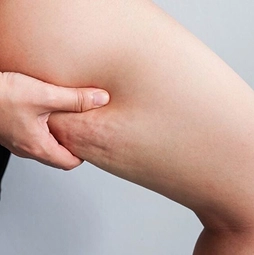
Beneath the surface of the skin, fatty tissue is crossed by fibrous connective tissue septa. In women, their arrangement is more likely to allow parts of the fatty tissue to push towards the skin while the septa pull it deeper. The result is the characteristic uneven surface.
Modern research suggests that cellulite is multifactorial. According to a review of anatomical and clinical studies published in Dermatologic Surgery, factors include the structure of connective tissue, hormones, microcirculation, skin thickness and elasticity, and the individual structure of subcutaneous tissue.
Imagine the surface of the skin as a soft layer supported by a network of fibres. In some areas, the tissue is gently “held down”, creating a depression, while in others fatty tissue slightly pushes the skin upwards. This difference in tension creates the characteristic uneven appearance.
This effect is partly caused by connective tissue septa that connect the skin with deeper structures. In women, their arrangement is more likely to contribute to visible dimples. However, cellulite is not caused by the structure of these septa alone — skin thickness and elasticity, fat distribution, hormones and microcirculation also matter.
This is why two people with a similar body shape can have a completely different appearance of cellulite, and a method that works well for one person may not always be the best choice for another.
Hormones
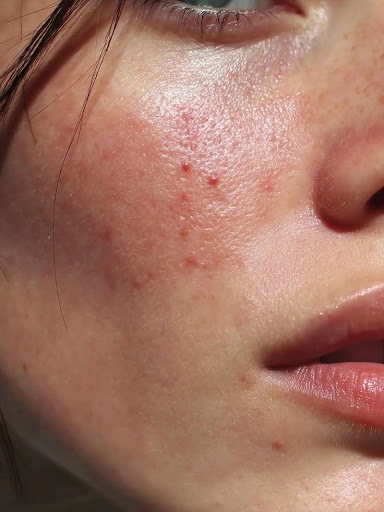
One of the reasons cellulite is much more common in women is the influence of hormones, particularly oestrogen, on fatty tissue, blood vessels and connective tissue.
This does not mean that every case of cellulite is a symptom of hormonal problems. For most women, it is a physiological feature of the skin. Hormonal changes may, however, affect how noticeable it is, which is why cellulite can become more visible during periods of major changes in the body.
Genetics
You can exercise, maintain a stable body weight and still have cellulite. Genetic predisposition affects factors such as fat distribution, connective tissue structure and the properties of the skin.
This is why two people with a similar weight and lifestyle can have a completely different skin structure on their thighs.
Lifestyle
Lifestyle is not the main cause of cellulite, but it can change how visible it is. Major weight fluctuations, low levels of physical activity, smoking or a diet that is very poor in nutrients may not support healthy skin condition. Maintaining a stable body weight and exercising the muscles regularly can help improve body proportions and tissue tone. This still does not guarantee completely smooth, dimple-free skin.
Microcirculation Disorders and Swelling
One theory of cellulite development also takes changes in microcirculation and lymphatic drainage into account. This is not the only mechanism, but in people who are prone to swelling, fluid accumulation in the tissues may make skin unevenness more noticeable.
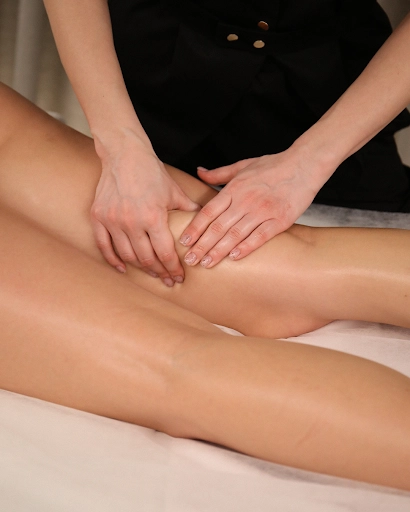
In this situation, lymphatic drainage massage may be a useful addition to regular care, particularly when the main problem is a feeling of heaviness and periodic swelling of the legs.
Types of Cellulite
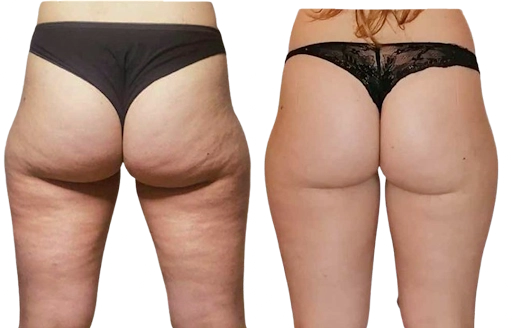
Popular terms such as water cellulite and fatty cellulite are primarily cosmetic terms rather than separate medical diagnoses. In practice, however, they can help describe the dominant issue.
| Skin appearance | What may dominate | What is usually worth focusing on |
| Unevenness + periodic swelling | fluid accumulation, poorer lymphatic drainage | movement, massage, drainage |
| Soft tissue and pronounced unevenness | subcutaneous tissue + septal structure | zabiegi mechaniczne i mechanical and energy-based treatments |
| Cellulite in a slim body | primarily connective tissue anatomy | treatments targeting skin structure |
| Cellulite + skin laxity | reduced firmness and skin quality | RF, selected lasers, combination therapies |
Dermatology also uses grades of cellulite severity. Milder changes become visible only when the skin is pinched or in a particular position. At higher grades, the depressions are visible while standing even without pressure.
How can you get rid of cellulite on the legs, thighs and buttocks? The thighs and buttocks are the areas where cellulite appears most frequently.
If you are wondering how to get rid of cellulite on your legs, it is worth first looking at its characteristics. With mild skin unevenness and a tendency towards swollen legs, movement, massage and managing swelling may be a good starting point. With deeper depressions, massage alone is usually not enough.
The same applies to the question: how do you get rid of cellulite on the thighs? There is no single procedure suitable for everyone. The best results come from matching the method to the specific mechanism involved.
Treatments used for the thighs and buttocks include:
- mechanical massage;
- acoustic wave therapy;
- radiofrequency;
- selected laser technologies;
- procedures that act directly on fibrous septa.
Anti-cellulite massage may also be a useful part of regular care, particularly as a supportive method for working with the tissues.
Which Cellulite Treatments Are the Most Effective?
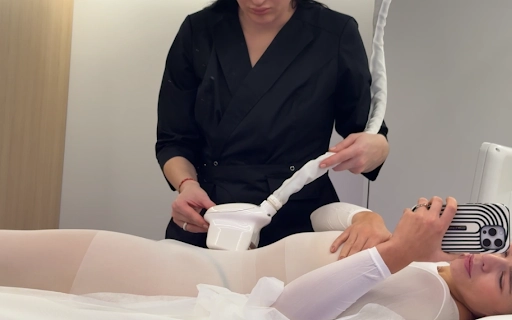
It is worth distinguishing between two things: a treatment used for cellulite and a treatment with strong evidence for long-term cellulite removal. They are not always the same thing.
Research reviews indicate that some methods produce measurable improvements in skin appearance, but the effects of many therapies are partial or temporary. Acoustic waves, radiofrequency and selected laser treatments are relatively well studied. The most durable results, however, are associated with procedures that act directly on the fibrous septa responsible for individual depressions.
Endermologie
Endermologie uses vacuum and mechanical tissue massage. Its purpose is to work intensively with the skin and subcutaneous tissue.
Research suggests that a course of treatments may improve the appearance of cellulite, although the durability of the effect is less well documented than with some technologies that directly target the connective tissue septa.
It is therefore better to view endermologie as part of a care plan rather than a promise to remove cellulite permanently.
Shockwave Therapy
Acoustic wave therapy is one of the better-studied non-invasive methods. In a review of cellulite treatment published in the International Journal of Women’s Dermatology, acoustic wave therapy was listed among the methods with some of the more favourable cellulite reduction results. Clinical studies have evaluated both radial and focused waves, usually as a course of treatments.
A course of around 6–8 sessions is most commonly required. This does not mean permanent cellulite removal, but the evidence for improving the appearance of the skin is reasonably strong.
Carboxytherapy
Carboxytherapy is also used in cellulite treatment. The procedure involves the intradermal or subcutaneous administration of medical carbon dioxide. The method is used, among other things, to work on skin quality and subcutaneous tissue, so it may be one element of a treatment plan selected according to the type of changes present.
Radiofrequency
Radiofrequency delivers thermal energy to selected layers of tissue. Heating the skin contributes, among other things, to collagen remodelling, which makes the method particularly interesting for cellulite combined with a loss of skin firmness.
Studies show improvements in skin appearance after courses of RF treatments, although results depend on the device, treatment parameters and the initial condition of the tissues.
Mesotherapy
Mesotherapy for cellulite is not one single procedure, so results cannot be evaluated in the same way for every preparation. If the main problem is deep dimpling caused by tight fibrous septa, superficial injections do not remove the mechanical cause. Mesotherapy may, however, form part of a treatment focused on improving skin quality.
Endospheres Therapy
Mechanical treatments used for cellulite also include Endospheres Therapy. The treatment uses compression and microvibrations, which means it can be part of a plan aimed at working with the tissues, skin unevenness and feelings of heaviness in the legs.
Laser
Lasers used for cellulite treatment vary considerably. According to a review by Bass Plastic Surgery, studies of a minimally invasive 1440 nm Nd:YAG laser showed lasting improvement over time because the procedure affects, among other things, fibrous septa and collagen remodelling.
This is, however, a completely different procedure from a gentle laser treatment performed only on the surface of the skin.
Effectiveness of Cellulite Treatments — Comparison
| Method | What it primarily does | Best suited for | What you need to know |
| Manual massage | works with tissues and interstitial fluid | mild unevenness, swelling | results usually require regular treatment |
| Endermologie | mechanical massage + vacuum | cellulite with swelling and uneven tissue | a course is usually required |
| Acoustic wave | acts mechanically on tissues | cellulite on the thighs and buttocks | has relatively good clinical data |
| RF | heats the tissues and stimulates collagen remodelling | cellulite + laxity | results develop gradually |
| Laser | depending on the technology: skin, collagen, septa | different types of changes | devices vary in effectiveness |
| Subcision | releases fibrous septa | pronounced individual depressions | minimally invasive procedure |
What Really Works for Cellulite?
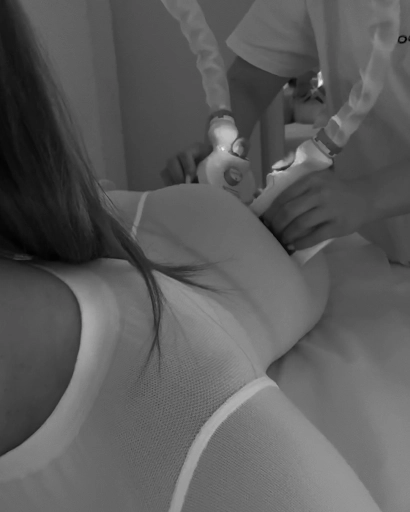
The method that works best on the appearance of cellulite is the one that targets its main cause in a particular person.
If the main issue is:
- swelling — regular movement, massage and drainage may be helpful;
- skin laxity — technologies that stimulate skin remodelling may make more sense;
- widespread unevenness — acoustic wave therapy, radiofrequency or combination treatment may be worth considering;
- deep, pronounced dimples — procedures targeting the fibrous septa are likely to make the most sense.
The best plan is therefore not always the strongest treatment. Sometimes a gentler therapy performed regularly is enough.
What Should You Avoid?
The biggest problem is treatments that promise permanent results without actually affecting tissue structure.
It is worth being cautious about:
- detox programmes claiming to remove cellulite in a few days;
- very restrictive diets;
- dehydration before an important event;
- supplements advertised as a way to “burn” cellulite;
- aggressive massage that leaves large bruises;
- the belief that a cream can mechanically remove fibrous septa.
Cosmetics can improve hydration and the appearance of the skin surface. This does not mean that they remove the anatomical cause of cellulite. A review of clinical research into the pathophysiology of cellulite described improvements after some products containing caffeine or retinol, although the available studies were small and in some cases the effect was short-lived.
How Can You Prevent Cellulite from Returning?
Cellulite is not a disease that can be treated once and then forgotten about. Its appearance is continually influenced by age, hormones, the skin and subcutaneous tissue. How the skin and tissues function between treatments also matters.
In practice, several factors are worth paying attention to. Regularity often makes more sense than a single intensive treatment, particularly with methods whose effects develop gradually. It is also useful to observe whether unevenness becomes more noticeable together with swelling. If so, reducing prolonged sitting and moving more frequently during the day may help.
Home care will not remove the structural cause of cellulite, but it can support skin condition and hydration. When assessing results, it is also better not to rely on memory alone: photographs taken in similar lighting, positions and at a similar time of day allow changes to be compared much more objectively.
The best result therefore comes not from a one-off attack on cellulite, but from a consistent plan: appropriately selected treatments, movement, monitoring swelling and regular care between appointments.
When it comes to cellulite, the greatest benefit often comes not from looking for one best method, but from correctly identifying what has the greatest influence on the appearance of the skin in a particular area.
The most important thing is to distinguish between swelling, skin laxity, changes in subcutaneous tissue and deep depressions associated with fibrous septa. Only then does it make sense to choose between massage, acoustic wave therapy, radiofrequency or other methods. This usually produces better results than another random treatment for “orange-peel skin”.
At PIED-DE-POULE, a plan may combine massage with appropriately selected cosmetology treatments, depending on the condition of the skin, the presence of swelling and the type of unevenness. After assessing the condition of the skin and tissues, a specialist may recommend a complete anti-cellulite treatment plan combining, for example, anti-cellulite massage, lymphatic drainage, Endospheres Therapy or other device-based treatments.
Such a plan is selected according to the type of cellulite, the presence of swelling, skin firmness and the desired result, while individual procedures can complement one another. This means that care is based on a consistent plan tailored to the individual.
Scientific Sources
Reviews and publications concerning the pathophysiology of cellulite and methods for reducing it:
- Cellulite: Current Understanding and Treatment — PubMed
https://pubmed.ncbi.nlm.nih.gov/38057600/ - Cellulite: A Review of Its Anatomy, Physiology and Treatment — ScienceDirect
https://www.sciencedirect.com/science/article/pii/S2352647518300418 - Insights Into the Pathophysiology of Cellulite: A Review — PMC
https://pmc.ncbi.nlm.nih.gov/articles/PMC7515470/ - Treatment for Cellulite — PMC
https://pmc.ncbi.nlm.nih.gov/articles/PMC6374708/